Art Styles
What Is Pop Art? Meet 5 Muralists Taking the Movement to the Streets

September 2, 2026

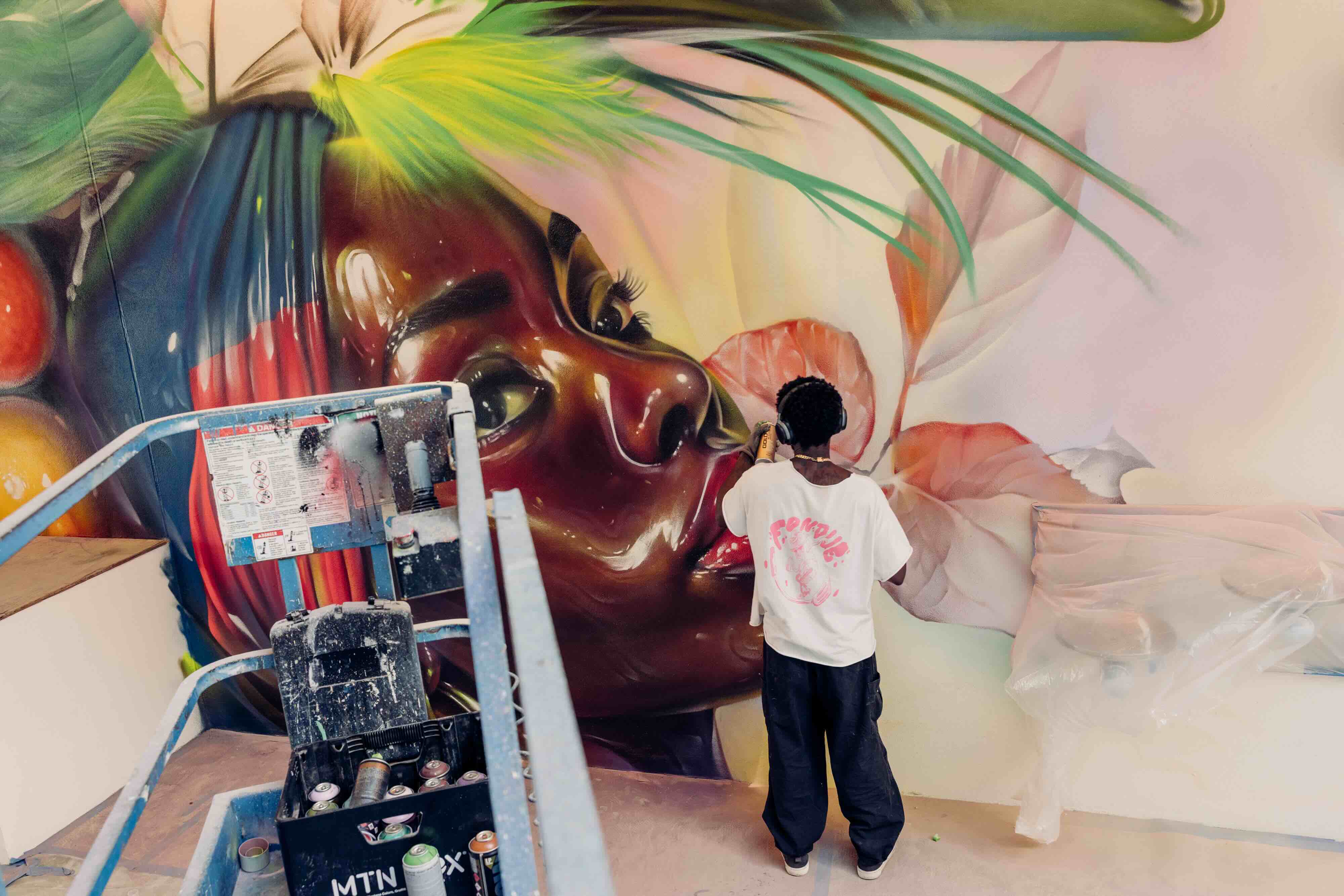
Most developers commission a mural after the building is done. A signature wall near the lobby, something photogenic for the leasing brochure. It checks a box. It rarely moves the needle.
Fisher Brothers did something different at Joule House, their new multifamily residential development at 2200 NW 1st Avenue in Miami's Wynwood district. Before a single unit was leased — before the building had its Temporary Certificate of Occupancy — they had committed to making public art the foundational identity of the property. Not an amenity. Not a marketing layer. The foundation.
The result is the Calle Collective: a free, publicly accessible open-air gallery embedded in Joule House's paseo, featuring 19 commissioned murals across 30,000 SQFT of the building's physical envelope, curated by WXLLSPACE from a roster of 19 Miami-based artists. By the time the TCO arrived, 18% of residential units were already pre-leased. A flagship retail tenant — Sunlife Organics — had signed a 2,000 SQFT lease. And the project had earned editorial placement in more than 15 outlets, including Miami New Times, COURANT, Resident Magazine, and PROFILEmiami.
This is what it looks like when a mural program is treated as a development asset from day one.
It is worth being specific about this, because "building mural program" undersells what Fisher Brothers built.
The Calle Collective is a branded open-air gallery. It has its own website at callecollective.com, its own virtual tour, and its own physical identity separate from the Joule House residential brand. It is free and open to the public every day from 9am to 6pm. It is now a stop on Wynwood Buggies' guided neighborhood art tours — the same circuit that routes visitors through Wynwood Walls and the district's most recognized cultural destinations. Every mural has a formal title, an artist biography, and a QR-coded plaque linking to curated Spotify playlists. A hidden bolt is embedded in every mural as a discovery element for visitors.
This is not an amenity residents walk past on the way to the elevator. It is a cultural institution that happens to be located inside a residential building.
That distinction is exactly why it worked. Wynwood renters are not choosing a neighborhood — they are choosing an identity. A property that adds to the neighborhood's cultural fabric rather than simply benefiting from it reads as authentic. That authenticity is what drove the pre-leasing velocity, the retail interest, and the press coverage. It cannot be faked and it cannot be retrofitted.
Before getting into how the program was executed, the outcomes are worth stating plainly.
Joule House pre-leased 18% of its residential units before receiving its TCO — before anyone could legally move in. Sunlife Organics, a premium wellness brand with existing Wynwood credibility, signed a 2,000 SQFT retail lease and cited the property's art-driven environment as a factor in that decision. Miami New Times included Joule House in its list of the 11 best murals in Miami. COURANT stated that the property sets the standard for art-integrated luxury in Wynwood. Resident Magazine described the Calle Collective as a testament to collaboration between real estate visionaries and Miami's creative core.
Fifteen-plus editorial placements generated by the program itself, not by a PR campaign around the building's amenities.
These are not coincidental results. They are the compounding return on a decision Fisher Brothers made before construction was complete: to treat art as infrastructure.
The failure mode is familiar. A developer finishes construction, realizes the lobby needs something on the wall, and commissions a single artist — often sourced through a personal connection — to paint a mural. It might be good. It might even get a mention in a local design publication. But it does not generate the kind of cultural traction that moves leasing, attracts retail tenants, or earns national press.
The reasons are structural, not aesthetic.
A single mural in a lobby is an amenity. It is interior to the building, visible only to residents and guests, and it does not create a reason for anyone in the neighborhood to engage with the property. It cannot become a destination. It cannot support a retail leasing story. It cannot anchor a press narrative.
What changes the calculus is scale, curation, public access, and timing. All four have to be present. Scale creates the visual impact that earns press attention and social sharing. Curation signals that the program reflects a considered point of view, not a transaction. Public access converts the building from a private asset into a neighborhood asset, which generates goodwill, foot traffic, and organic coverage. And timing — commissioning early, before TCO — means the art program is part of the pre-leasing story, not a follow-up.
Most developers get one of these four right. Joule House got all four.

Three decisions separated Joule House from the standard developer mural program.
It was designed into the building, not applied to it. Before any artist was selected, WXLLSPACE coordinated with the architecture team at RocketAir to map mural placements against Revit models and CAD files. Wall assignments, dimensions, and sight lines were confirmed at the architectural level. The murals were not positioned after the fact — they were part of the building's design intent from the planning phase.
It was curated across 19 artists, not commissioned from one. WXLLSPACE built the artist roster to cover the full building envelope: Dasic Fernández and Nico on the exterior facade as the primary street-facing landmark, Ahol Sniffs Glue at the residential entrance to signal authentic neighborhood belonging, and 15 artists across the Calle Collective paseo including Tatiana Suarez, Hiero Veiga, HOXXOH, ABSTRK, BKFoxx, and others with established Miami profiles. Each artist was selected for their fit with the zone, the scale, and the Wynwood context — not for availability. The result is a program that reflects the genuine breadth of Miami's mural community, which is exactly what the press responded to.
It was branded as a public destination from launch. Fisher Brothers and WXLLSPACE created a standalone identity for the Calle Collective — its own name, website, visual system, and gallery infrastructure — before the public launch. The opening was marked with a Wynwood block party. The gallery was integrated into neighborhood tour routes. The program created a reason for people who will never live in Joule House to walk through the paseo, engage with the art, and share it. That public engagement is what converted a residential building's art program into a neighborhood cultural institution.
If you are planning a mural program for a residential or mixed-use development, the Joule House model offers a clear framework.
Commission before TCO, not after. The art program needs to be part of the pre-leasing narrative. If you are starting conversations about murals during lease-up, you have missed the most valuable window.
Think in zones, not walls. A single wall does not create a destination. A program that covers multiple surfaces — exterior, entry, paseo, interior amenity spaces — creates a property-wide identity that is both photographable and press-ready.
Brand the program separately. Calle Collective is not "Joule House murals." It has its own name, its own website, and its own identity. That separation is what allowed it to function as a public cultural destination rather than a building feature.
Make it accessible. A gallery that only residents can see generates no press, no foot traffic, and no retail interest. Public access is what converts art investment into neighborhood asset.
Work with a platform that manages the full scope. The Joule House program involved 19 artists, 30,000 SQFT across five building zones, active construction coordination, vendor management, and a multi-year production timeline. That requires a commissioning partner who can handle the operational complexity without the developer absorbing it.
COURANT called Joule House the standard for art-integrated luxury in Wynwood. That is not a casual description. Wynwood is the neighborhood where the modern mural movement in American real estate began. Setting the standard there means something.
The Calle Collective is free and open daily at 2200 NW 1st Avenue in Miami. If you want to see what 30,000 SQFT of curated public art looks like on a residential building — and what it does for a development — visit callecollective.com or walk the paseo yourself.
If you are a developer planning a project and want to understand how WXLLSPACE structures programs like this, connect with our team or read the full Joule House case study.

