Art Styles
What Is Pop Art? Meet 5 Muralists Taking the Movement to the Streets

September 2, 2026

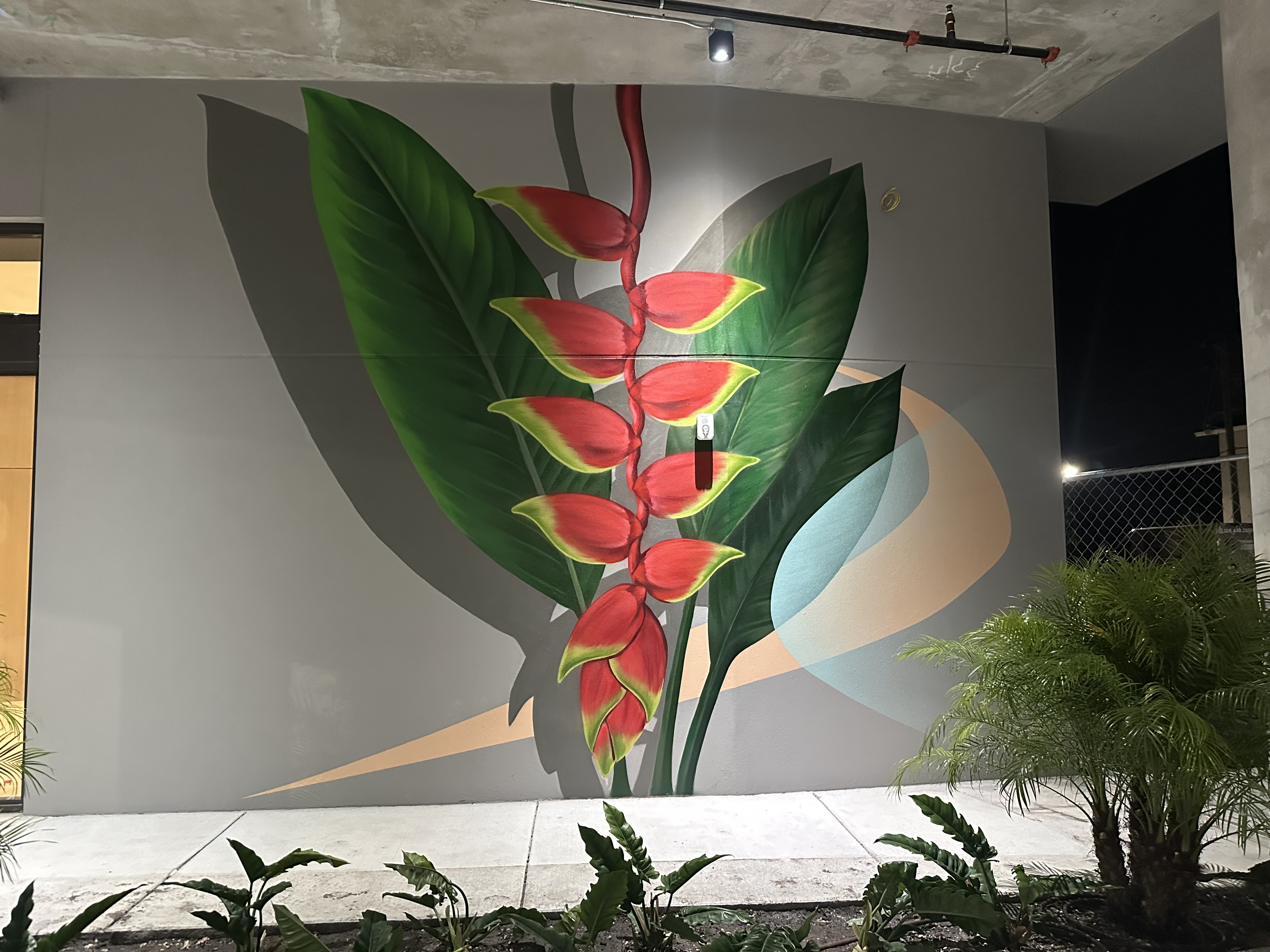
The architects had thought about the roofline. The leasing team had thought about the amenity deck. The marketing department had thought about the lobby. Nobody had thought about the garage walkway.
That is usually how it goes. Transitional spaces, the corridors and breezeways and covered entries that link one part of a development to another, get treated as infrastructure. They are engineered to move people, not to stop them. At Casa Princeton, a new multifamily development in Princeton, Florida developed by Aconcagua Group, that walkway connected the garage building entrance to the rest of the property. It was raw CMU, untreated, and unremarkable. Functionally, it worked. Experientially, it was a dead zone.
The development team knew this. They had flagged the space as an opportunity. What they did not have was a way to act on it.
Aconcagua Group came to WXLLSPACE without an internal curator, without a shortlist of artists, and without a commissioning process in place. That is not unusual. Most development teams are not structured to procure large-scale public art, and most of the time, they should not have to be. It is a specialized discipline sitting at the intersection of project management, creative direction, compliance, and logistics. Developers are in the business of building and leasing, not running art departments.
WXLLSPACE stepped in as the full commissioning partner. The scope was defined: two walls, each 12 feet wide by 12 feet high, raw CMU surface, ladder access only, and a primary objective of activating the pedestrian entry experience between the garage building and the development beyond.
Artist Muta Vision was selected from the WXLLSPACE network based on project fit, surface experience, and the ability to execute within the production window available. Before a single can of paint was opened, WXLLSPACE coordinated a site walkthrough with the general contractor and construction team to confirm access, align on safety protocol, and establish how the install would run alongside ongoing construction activity on the broader site. Details like this tend to get handled informally or not at all when development teams try to manage art commissions in-house. On a live construction site, that creates risk for everyone.
Muta Vision arrived on October 26, 2025, and worked as the sole artist across both walls. The medium was Montant94 spray paint applied directly to raw CMU, a surface that demands the right material selection to hold the work long-term. The install ran for four days, ladder access throughout, and closed out on October 30.
There was no lift equipment. No crew. Just an artist working methodically across two walls in a covered walkway that most people had walked through without thinking twice.
Four days. A ladder. Two blank CMU walls. That is all the runway Muta Vision needed to transform a dead zone into the first thing residents experience when they come home.
By October 30, the walkway was no longer infrastructure. It was a destination. Stakeholders at Aconcagua Group reported that the installation added significant character and placemaking value to the entry experience, a change that was immediately observable to anyone walking through the space.
Residents do not enter their building the way a rendering suggests they will. They enter through parking garages. They walk through side corridors. They use the back door. The spaces that get the least design attention often get the most daily use, and the impression they leave accumulates over time. A lobby mural matters. A garage walkway mural matters more than most developers expect, because it is the space residents move through every single day.
At Casa Princeton, the decision to commission art for that walkway was not about aesthetics for its own sake. It was about recognizing that a utilitarian space could become a community anchor, a moment that signals to residents that the development they chose is one that pays attention. That signal is difficult to manufacture through amenities alone. It requires intentional investment in the spaces people actually inhabit.
From the development team's perspective, the Casa Princeton commission required minimal internal lift. Aconcagua Group engaged WXLLSPACE, aligned on the project scope, reviewed and approved the artist and concept, and participated in the pre-install site walkthrough. WXLLSPACE handled the rest: artist sourcing, production planning, GC coordination, and installation management through closeout.
The four-day install window was protected. The site coordination was managed. The finished work was delivered on time, on a wall that had previously offered residents nothing at all.
That is what it looks like when a development team decides that no wall is too small to deserve attention.

