Art Styles
What Is Pop Art? Meet 5 Muralists Taking the Movement to the Streets

September 2, 2026

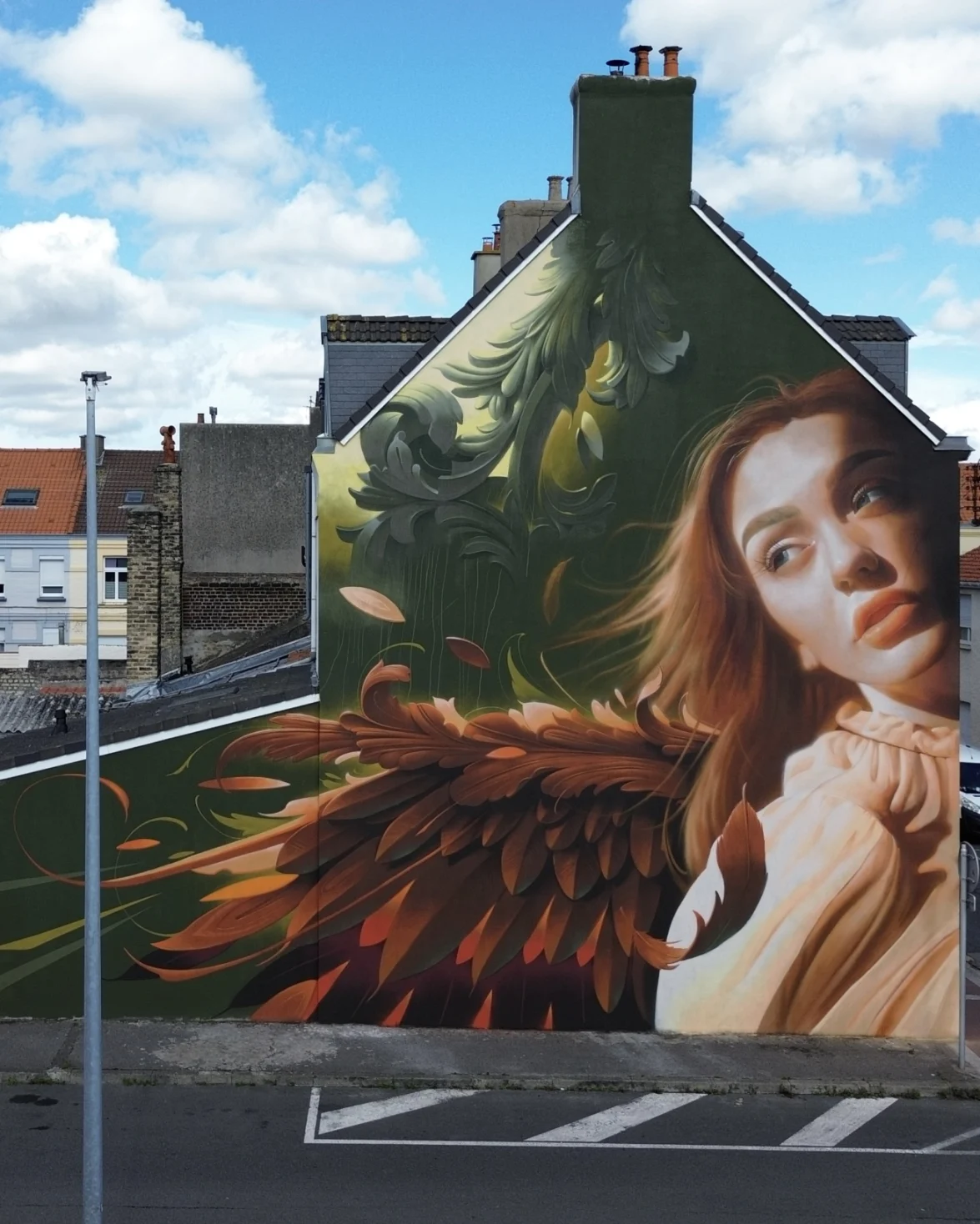
Most development teams make public art decisions based on intuition, aesthetic preference, or a vague sense that it is good for the community. The research that justifies those decisions as financial ones exists — across ULI reports, post-occupancy studies, and documented market case studies — but it is scattered across sources that most development managers never see in a single place. The result is that public art programs get approved on soft grounds and cut when budgets tighten, precisely because no one in the room can quantify what they are cutting.
This article consolidates the financial case. It covers four documented mechanisms through which public art affects real estate returns — property value uplift, leasing velocity, brand premium, and community approval leverage — and provides a working ROI framework that a development manager can apply to a specific asset. The goal is not to make the case for art. It is to make the case for art as a capital allocation decision.
The Urban Land Institute has identified placemaking — including public art — as a measurable contributor to rental premium and absorption rate in mixed-use and multifamily developments. Academic research across multiple US markets has documented a correlation between sustained public art investment and property value appreciation in surrounding parcels, with methodologies that have grown more rigorous since the initial studies of the 1990s. The finding is consistent: the presence of curated public art in a commercial corridor or residential district correlates with accelerated value growth relative to comparable areas without it.
The mechanism is not aesthetic. It is signaling. Public art in a commercial context signals that investment is active, that the demographic profile of the area is shifting, and that the asset is positioned for a particular market identity. That signal precedes and accelerates the capital improvements that drive hard value. It also generates a feedback loop: media coverage, social sharing, and foot traffic that reinforces the signal over time.
The Wynwood Arts District in Miami is the most thoroughly documented US example at district scale. In the early 2010s, Wynwood was an underutilized industrial corridor. Following organized large-scale mural investment — anchored by Art Basel and driven by property owners including the Goldman Properties group — commercial rents in the district rose sharply and the area became one of Miami's highest-value retail and hospitality corridors within a decade. Property values in surrounding blocks appreciated at rates that significantly outpaced the broader Miami market during the same period. The Goldman group's investment in public art was a deliberate placemaking strategy, not a cultural initiative, and the financial returns reflect that framing. WXLLSPACE has completed projects in Miami and across comparable markets — see completed projects for project-level documentation.
Post-occupancy research on individual multifamily and mixed-use assets corroborates the district-level findings. Properties with high-visibility exterior public art installations in competitive lease-up markets have consistently demonstrated shorter time-to-lease, higher initial asking rents, and stronger retention rates than comparable assets in the same submarket without similar installations. The effect is most pronounced in Class B value-add repositioning plays where the mural functions as the first visible signal of the renovation program before interior improvements are complete.
Properties with distinctive public art installations in high-visibility locations have demonstrated the ability to command 3–8% rent premiums over comparable assets in the same submarket, particularly in multifamily. The mechanism is market differentiation: in a leasing environment where Class B and Class A assets compete on finishes and amenities that have become increasingly commoditized, a photographable exterior asset creates a brand distinction that affects leasing conversations before a prospective tenant walks through the door. A 3% rent premium on a 150-unit multifamily asset at a $2,000 average monthly rent represents $108,000 in additional gross annual revenue. At a 5.5% cap rate, that revenue differential represents approximately $1.96 million in asset value. The mural is the trigger event.
Vacancy days carry a direct cost that most development pro formas model conservatively. A 150-unit asset carrying 15 vacant units at $2,000 per month is absorbing $30,000 per month in uncollected revenue. Public art installations that generate organic social media coverage — a well-scaled, well-photographed exterior piece typically produces 1.5 to 2 million organic impressions in the first 90 days post-installation — reduce effective marketing spend and shorten the lease-up timeline. The mural functions as a media asset: it generates earned coverage that paid media cannot replicate at the same cost-per-impression. The effective CPM of a $60,000 mural generating 2 million impressions over 18 months of leasing use is well under $0.05, compared to $8–$12 CPM for paid social media in comparable markets.
In value-add development plays, the sequencing of capital improvements affects market perception as much as the improvements themselves. A well-executed exterior mural shifts the perceived brand register of a property before any interior renovation is complete. For a development team managing a repositioning that will take 18 to 24 months to fully execute, a mural installed in month two sends a legible market signal: the asset's trajectory is upward, the ownership group is investing, and the product being delivered will be differentiated. That signal affects tenant inquiries, retention conversations with existing tenants under repositioning pressure, and lender perception during refinancing discussions.
In markets where development projects face neighborhood resistance or require formal community engagement processes, a credible public art program provides leverage that has direct financial value. Several developers operating in Los Angeles, Chicago, and New York have included documented public art commitments in community benefit agreements as part of contested entitlement processes. The art functions as a tangible investment in local cultural identity that community stakeholders can point to as a concession. A project that clears community approval in six months rather than 18 months carries a materially different cost structure and return profile. This is not a soft benefit — it is a timeline variable with quantifiable financial implications.
The following framework is a model with inputs, not a return guarantee. Actual results depend on the execution variables discussed in the next section. The purpose of the framework is to make the math visible so a development manager can apply it to a specific asset with their own assumptions.
Base case: 150-unit multifamily, $2,000/month average rent, competitive lease-up market, 3,000 SQFT exterior mural installation.
Mural investment: A 3,000 sq ft exterior mural installation runs approximately $45,000–$75,000 fully installed, including surface prep, artist fees, UV sealing, and scaffold if required. See commercial mural cost for project-specific estimates.
Organic media value: A well-photographed exterior piece at street scale generates approximately 1.5–2 million organic social media impressions in the first 90 days post-installation. At a conservative $8 CPM benchmark for paid social, that organic impression volume has a replacement value of $12,000–$16,000. Over 18 months of active use in leasing materials and digital channels, the effective media return on the mural investment is material.
Rent premium scenario: A 3% premium on 150 units at $2,000/month = $9,000/month incremental gross revenue = $108,000/year in additional stabilized income.
Asset value implication: At a 5.5% cap rate, $108,000 in additional stabilized annual revenue implies approximately $1.96 million in incremental asset value at disposition.
Return multiple: A $60,000 mural investment generating $1.96 million in asset value at stabilization represents a 32x return on that capital deployed — before accounting for leasing velocity improvement or reduced paid media spend. Even at a more conservative 1% rent premium, the asset value implication ($653,000 at 5.5% cap rate) represents a 10x return on a $60,000 investment.
The 32x figure is a model output, not a historical average. It illustrates the leverage ratio that makes public art an asymmetric bet for development teams willing to execute it correctly. The next section defines what correct execution requires.
Not all murals generate measurable financial return. The research supports the category; the execution determines whether a specific installation captures the return the category makes possible. Three variables drive the difference.
The artwork must be appropriate to the brand context of the property and photogenic enough to generate organic amplification at scale. A technically skilled mural that does not photograph clearly from street distance, or whose visual language is misaligned with the target tenant demographic, underperforms regardless of artistic quality. A hyper-illustrative cartoon mural in a luxury multifamily lobby creates brand dissonance that registers with prospective tenants before they consciously identify it. Artist selection for commercial context is a different discipline than artist selection for creative merit — the two are related but not equivalent, and the sourcing process should reflect that distinction.
Small lobby installations generate minimal organic reach. An exterior wall visible from a high-traffic corridor or intersection, at a scale sufficient to register in a smartphone photograph taken from across the street, is the installation that drives leasing velocity, press coverage, and social sharing. Scale is a financial input variable, not an aesthetic preference. A 500 sq ft interior lobby piece and a 3,000 SQFT exterior face wall are not comparable investments from a return perspective — they serve different functions, generate different levels of organic amplification, and carry different implications for the asset's market positioning. Development teams that budget for small interior installations and expect exterior-scale returns are measuring the wrong asset.
A mural that is never professionally photographed, never integrated into leasing materials, never published to the property's digital channels, and never pitched to local press or real estate media generates zero incremental return beyond the physical improvement. The art is the raw material; the documentation and distribution strategy is the monetization mechanism. Budget $800–$2,000 for professional photography within two weeks of installation completion. That photography should appear in every leasing touchpoint — broker packages, ILS listings, social channels, and the property website — within 30 days. Development teams that skip this step consistently underperform the return potential of the installation they funded.
WXLLSPACE works with real estate developers to scope, source, and deliver public art programs built around the financial metrics that matter to development and asset management teams — not aesthetic preference. Tell us about your development and we will identify the artist, scale, and placement strategy appropriate to your asset's market context and return objectives.

